5 Scam Trends Spiking in 2026: What you should know
Americans lost a record $20.9 billion to cybercrime in 2025 — a 26% year-over-year jump — according to the FBI’s Internet Crime Complaint Center (IC3) annual report released this spring. For the first time, the IC3 carved out AI-facilitated fraud as its own category, logging $893 million in reported losses across more than 22,000 complaints.
Behind those headline numbers, a handful of specific scam types are responsible for most of the surge. Here are the five trends driving fraud losses right now — and what you should be warning your family about this week.
1. “Task scams” — pay-to-work schemes exploding worldwide
Two years ago, task scams were barely on the FTC’s radar. Today they are one of the fastest-growing fraud categories in the world, with tens of thousands of complaints logged in 2024 after virtually none in 2020.
The pattern: a WhatsApp or Telegram message from a stranger who “got your number from a friend” offering an online side gig — rating products, liking YouTube videos, boosting restaurant ratings. The first few tasks pay a small bonus in crypto or through a platform wallet. Then a “premium” batch requires a deposit to unlock. The deposit grows. The withdrawal never comes.
The labels vary — “Amazon Flex,” “TikTok engagement,” “Airbnb listing reviews” — but the mechanics are identical. The single rule that stops every version of it: if a job asks you to pay to keep working, it’s a scam.
Task scams have started bleeding into romance scam patterns — the same relationship-building cadence, the same trafficking-compound playbook — just with a fake job replacing the fake love story.
2. Fake toll and DMV texts are now part of daily life
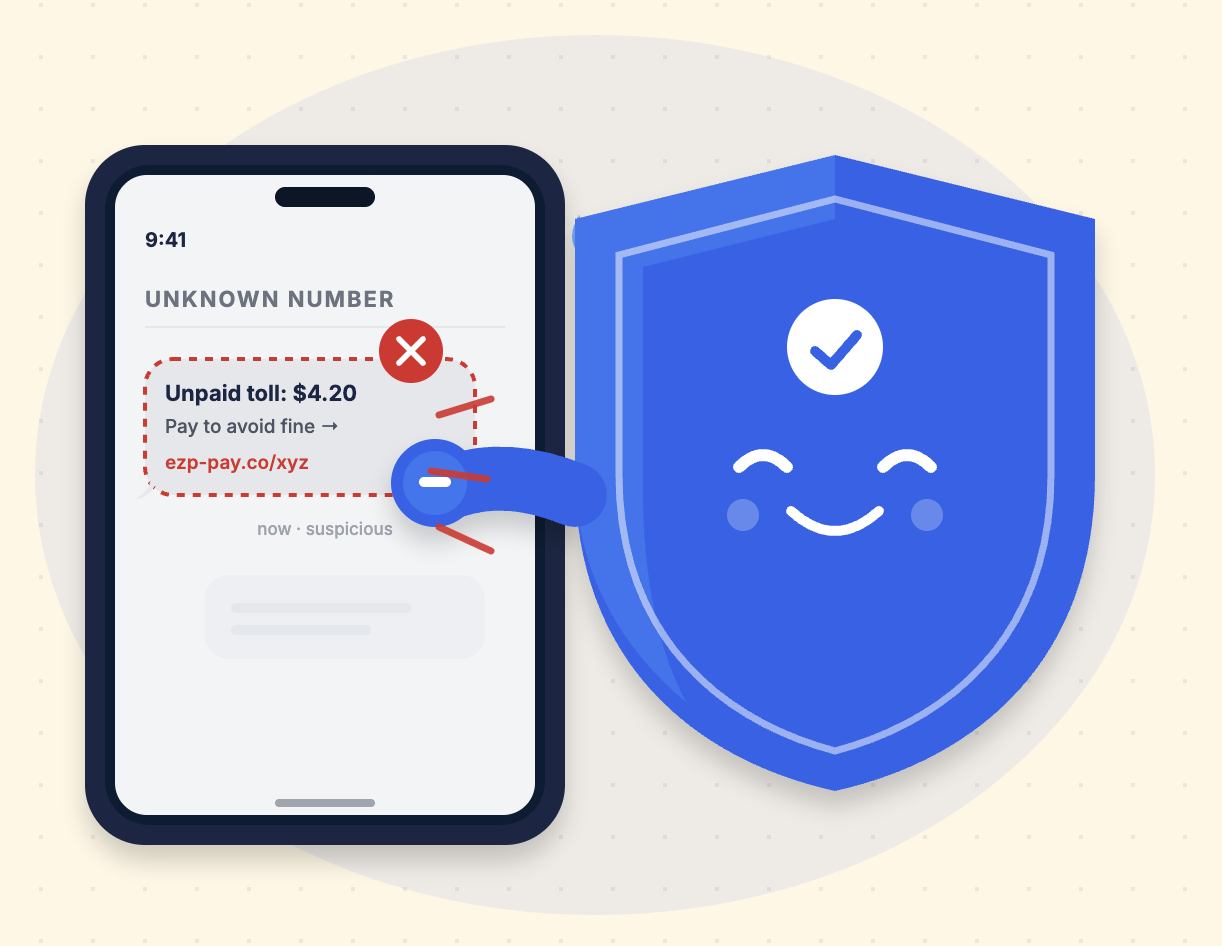
The FCC and more than two dozen state toll agencies have issued formal warnings about smishing texts impersonating E-ZPass, FasTrak, I-PASS, and state motor vehicle departments. Americans lost $470 million to package and toll smishing in 2024 alone, and 2025 volumes are higher still.
The pattern never changes: an unpaid balance notice, an urgent link, and a fee in the $2–6 range — small enough that victims enter a credit card without a second thought. No U.S. toll agency or DMV collects unpaid balances by text. If you want to verify, type the agency’s URL directly into your browser — never click the link in the message. Our USPS smishing guide breaks down the full pattern.
3. AI voice cloning jumped from novelty to mainstream threat
The FBI’s IC3 report broke out AI-facilitated fraud for the first time: 22,000+ complaints and $893 million in reported losses — with $352 million of that coming from adults 60 and older. The dominant tactic is voice cloning in “grandchild in jail” and fake-kidnapping calls.
Three seconds of audio scraped from a public TikTok, Instagram reel, or voicemail greeting is enough to produce an 85% voice match. The defense is simple, free, and works: agree on a family codeword that any emergency call must include, and teach every family member the hang-up-and-call-back reflex. Our AI voice cloning guide walks through the full setup.
4. Government impersonation complaints doubled in a year
The IC3 report also flagged a striking surge in government impersonation: complaints climbed from roughly 17,300 in 2024 to nearly 32,500 in 2025, with $797 million in reported losses. The most-spoofed agencies are the IRS, Social Security Administration, Medicare fraud units, and local police — and these now arrive by text as often as by phone.
The tell, every time: real federal agencies don’t text demanding money, don’t accept gift cards or crypto, and don’t threaten immediate arrest. If a caller asks for a Venmo transfer to “clear” your Social Security number, hang up. That isn’t a government employee on the line.
Older adults bear most of the dollar losses in this category — see our 2026 playbook for protecting elderly parents from scams for a step-by-step framework, and our guide to scams targeting military veterans for the VA-impersonation variants that hit veterans the hardest.
5. “Recovery scams” are preying on yesterday’s victims
One of the most insidious emerging patterns targets people who have already been scammed once — especially victims of pig-butchering crypto fraud, whose names circulate on the same lead lists the original scammers built. Fake law firms, fake blockchain investigators, and fake government liaisons promise to recover lost crypto or wired funds — for a retainer paid upfront. The FBI logged nearly $10 million in recovery-scam losses in a single 12-month window, and the trend accelerated through 2025.
The rule is absolute: if someone contacts you offering to recover your stolen money, they are the next scam. Legitimate recovery happens through law enforcement (ic3.gov) or licensed counsel you locate yourself — never the other way around.
The common thread
Across all five trends, one thing unites them: every scam starts with an unsolicited message. A text. A DM. A call. A LinkedIn invite.
The most cost-effective defense isn’t a smarter filter or a new app. It’s a family that has practiced, out loud, what to do when a message like that arrives — a default of delete-without-clicking, and a codeword that stops an AI voice dead in its tracks.
This conversation needs to happen across every generation in the household. Our guide to teaching kids about online scams without scaring them covers the under-18 version; the monthly financial-statement review covers the over-60 version — both are the same idea: routine practice before it costs anyone real money.
Practice beats panic.
ScamDrill sends safe, realistic fake texts, voicemails, and emails to your family on a rotating schedule — calibrated to the scams trending right now. When someone “falls” for one, they get a teachable moment instead of a real loss.
Start your family plan →Pick one person in your family this week. Forward them a fake toll text, a fake “Grandma, I’m in trouble” voicemail, or a fake IRS notice. Walk through it together. Then rotate to the next person the week after. The people who report “I can’t believe I fell for this” are almost never the ones who had practiced.